Short FIlm
Directing
Writing
Producing
2023-2025
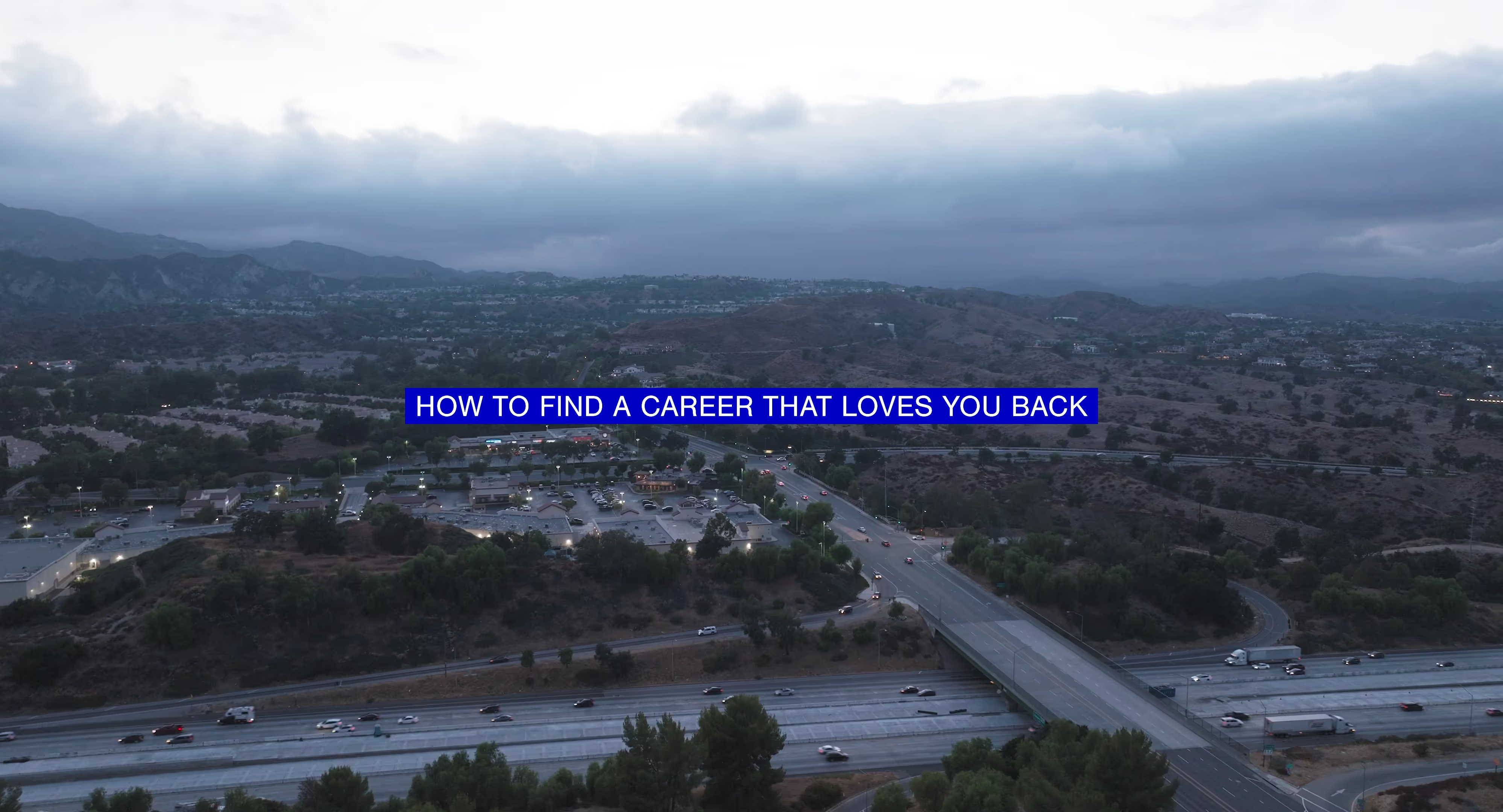
A surveillance drone sweeps past highways, trees, and homes, ingesting a firehose of data. It identifies every person and vehicle it sees before labeling them as a civilian or a combatant. The labels flicker indecisively as the camera zooms out further to see a computer screen, with dozens of similar video feeds.
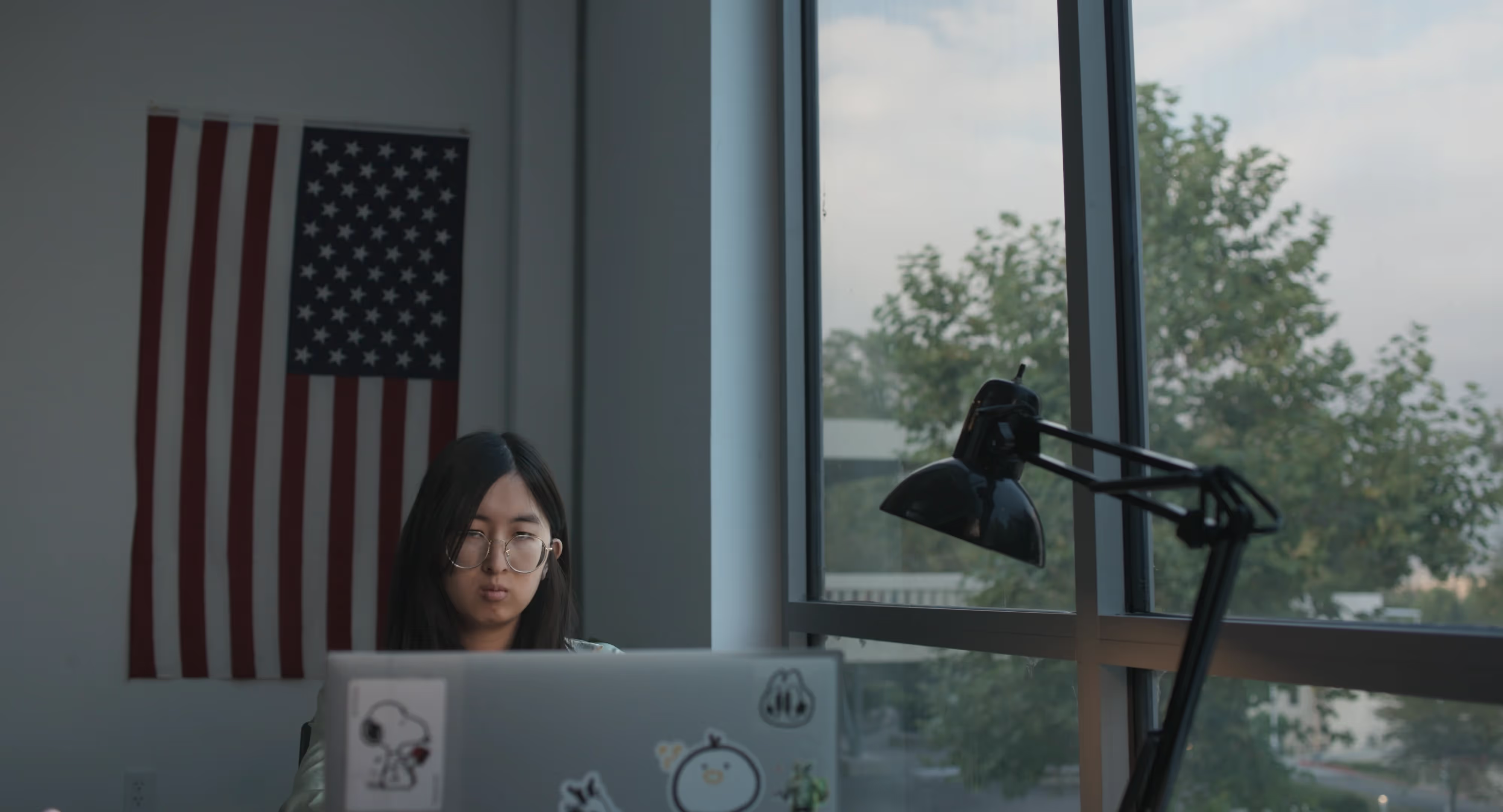
Khloe, a trans woman software developer, sits in front of the computer in an empty open-plan office. She works for Scryr, a defense-technology startup that provides her certainty and stability, a rare commodity for a trans American like her.
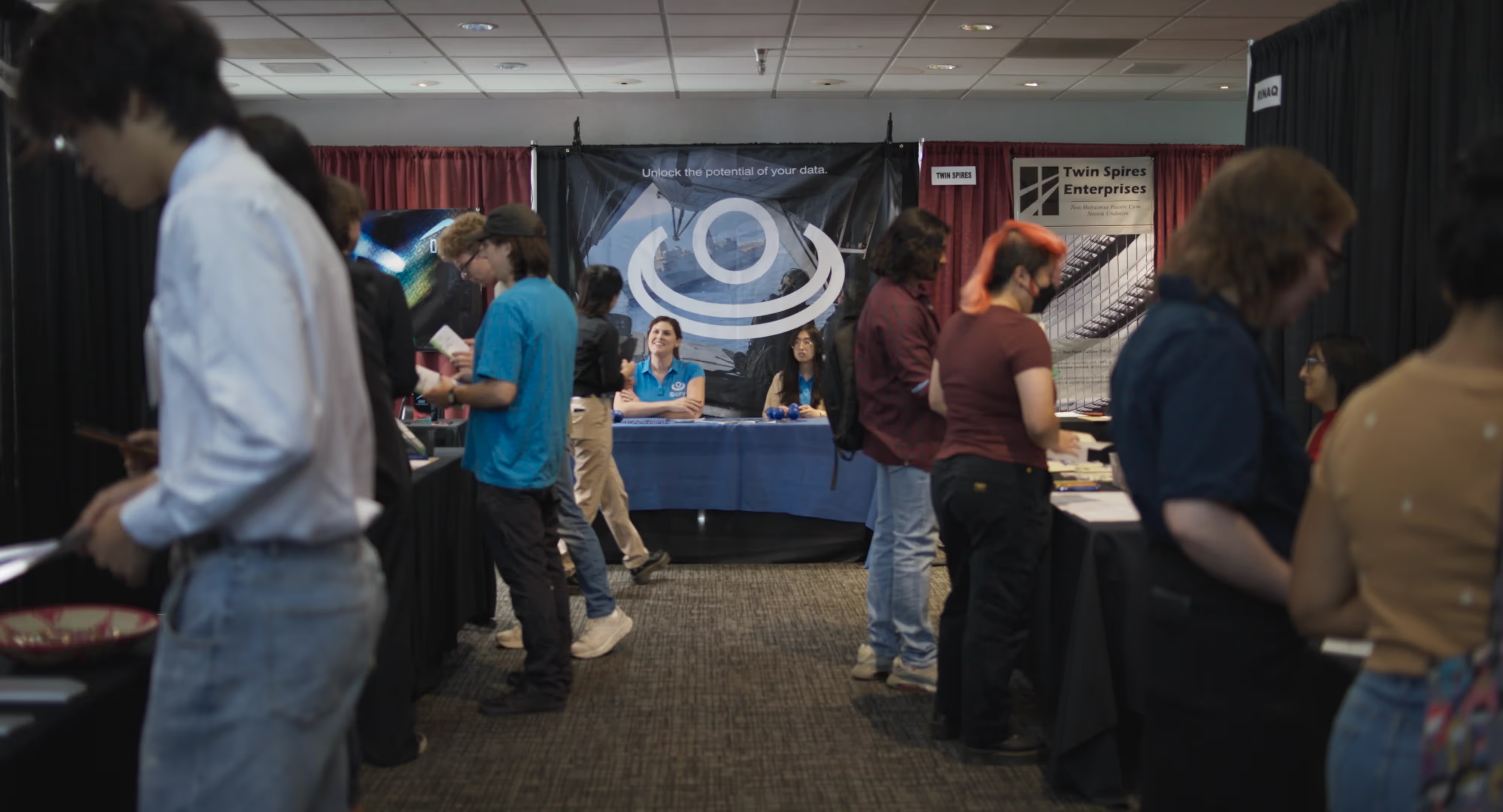
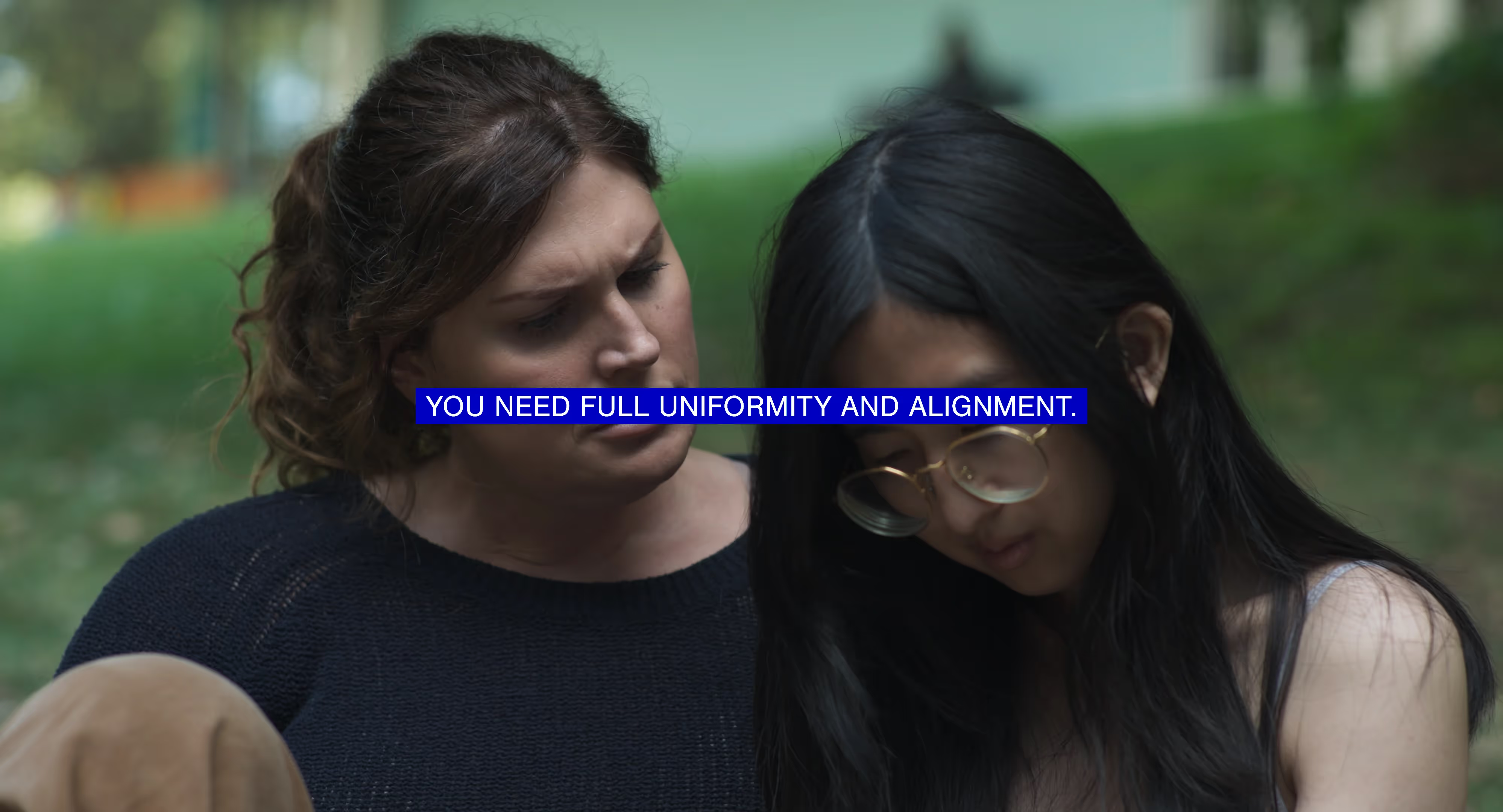
Scryr, recognizing that Khloe is a good example of diversity, sends her to her alma mater’s college career fair alongside Joyce, the one other trans woman at the company. The two women meet for the first time when Joyce picks Khloe up for their two-day work trip. Joyce has been with Scryr for a decade; in their shared hotel room, Khloe and Joyce bond over the experience of returning to campus after spending years away.
While Joyce gets ready for the career fair, Khloe decides to walk around campus. Seeing herself in the students around her, Khloe reflects on the hostile ideology that underpins her work.
Khloe finally compartmentalizes these thoughts at the career fair when Joyce shows up, providing a calm presence that seems to know all the right things to do and say. Over dinner, their bond turns flirtatious, and the two women spend an intimate night together in their hotel room.
The next day, Khloe is slated to give a technical lecture to students about her work. Khloe’s confidence builds as Joyce helps her practice her presentation. However, the content of Khloe’s speech brings back her doubts from yesterday, stopping her in her tracks.
During the presentation, Khloe tries to hide her discomfort, but she can’t stop looking at the students in the audience: wide-eyed and desperate for a life free from uncertainty, just like her.
When Joyce tries to congratulate her for a great lecture, Khloe breaks down in tears and tells Joyce that she wants to quit her job. Khloe, desperate, begs Joyce to leave Scryr with her and leave everything they know behind. Although Joyce is just as disillusioned with her work as Khloe is, she cannot imagine a better future for herself.
Joyce watches Khloe walk away into a life of uncertainty, as their love falls apart, forever.
I, like my immigrant parents, left everything I knew behind in search of a better life. They came to America, and I double-transitioned; that is, I changed my career from data science to film at the same time I began my gender transition.
I remember attending career fairs as a male data scientist, finding myself lost in the buffet of possible futures. Each company offered not only a job but also spiritual fulfillment, purpose, and belonging, but every promise felt strangely hollow.
From my time as a statistician and machine learning researcher, I became very aware that controlling how information becomes knowledge is an immense power that can lead to incredible violence. This is a cross that we bear as both statisticians and filmmakers: we organize the chaos of the world into stories that change how organizations, governments, and armies understand reality.
And this is why I am so concerned about how, over the past decade, a new breed of defense company has quietly become indispensable to America. With a Silicon Valley mindset and bleeding-edge technologies — machine learning, big data, AI, large-scale surveillance, drones, and satellites — these upstarts offer governments, police agencies, and armies the opportunity to categorize the entire world, in real-time, with explicit intent of enabling state violence at home and abroad.
This automated optimization of violence has led to global instability on a massive scale, as the American government fights to maintain its neoimperialist power across the globe. Therefore, as a second-generation American citizen, I feel responsible for contributing to nearly every atrocity in the world.
And yet, my immigrant parents sacrificed so much to become American citizens, to assimilate into this culture. They came here in search of the American dream, and they found a country that treated them well, but only while they were useful.
As it has become politically fashionable to enact hateful legislation against Asian-Americans, immigrants, trans people, and women, America has shown me that she is intent on treating me the same way.
Therefore, HOW TO FIND A CAREER THAT LOVES YOU BACK studies this phenomenon of conditional tolerance through the lens of paradoxical characters who have already changed their lives once through gender transition, but are struggling to do so again.
If storytelling is a source of immense power, then I believe that the camera is a weapon. I treat it as such; I work in deep collaboration with those in front of, and behind, the lens to tell our story together.
This commitment transcends the shoot day. If this is a film about how trans people are exploited by military-industrial capitalism, then this is a film made by trans people, and over half of the budget went to paying every single member of our cast and crew what we could, if not what they deserve.
Furthermore, we pulled from hybrid-documentary filmmaking techniques, casting a mix of actors and non-actors with backgrounds in the tech industry, and working extensively with rehearsal and improvisation to create moments that feel true.
Our goal was to blend the personal and political on all levels of the story. Therefore, this film is a narrative told through experimental techniques, which allows it to challenge the audience to consider how they themselves contribute to, and are bound by, the systems of violence that surround our two heroines.
HOW TO FIND A CAREER THAT LOVES YOU BACK is the most ambitious project I have ever undertaken, and this is the most people I’ve ever brought together in one place. It has been validating proof of the strength of the trans community that I’ve built up around myself, and my growth as an artist and a human.
In middle school, I devoured hundreds of short films online and they confused me in all the right ways. I hope that HOW TO FIND A CAREER THAT LOVES YOU BACK will help those who are lost figure out who they actually are by shaking their sense of self. After all, if it weren’t for films like this, I wouldn’t be me.
– Ethernet Wang <3

Short FIlm
Directing
Writing
Producing
2023-2025
A surveillance drone sweeps past highways, trees, and homes, ingesting a firehose of data. It identifies every person and vehicle it sees before labeling them as a civilian or a combatant. The labels flicker indecisively as the camera zooms out further to see a computer screen, with dozens of similar video feeds.
Khloe, a trans woman software developer, sits in front of the computer in an empty open-plan office. She works for Scryr, a defense-technology startup that provides her certainty and stability, a rare commodity for a trans American like her.
Scryr, recognizing that Khloe is a good example of diversity, sends her to her alma mater’s college career fair alongside Joyce, the one other trans woman at the company. The two women meet for the first time when Joyce picks Khloe up for their two-day work trip. Joyce has been with Scryr for a decade; in their shared hotel room, Khloe and Joyce bond over the experience of returning to campus after spending years away.
While Joyce gets ready for the career fair, Khloe decides to walk around campus. Seeing herself in the students around her, Khloe reflects on the hostile ideology that underpins her work.
Khloe finally compartmentalizes these thoughts at the career fair when Joyce shows up, providing a calm presence that seems to know all the right things to do and say. Over dinner, their bond turns flirtatious, and the two women spend an intimate night together in their hotel room.
The next day, Khloe is slated to give a technical lecture to students about her work. Khloe’s confidence builds as Joyce helps her practice her presentation. However, the content of Khloe’s speech brings back her doubts from yesterday, stopping her in her tracks.
During the presentation, Khloe tries to hide her discomfort, but she can’t stop looking at the students in the audience: wide-eyed and desperate for a life free from uncertainty, just like her.
When Joyce tries to congratulate her for a great lecture, Khloe breaks down in tears and tells Joyce that she wants to quit her job. Khloe, desperate, begs Joyce to leave Scryr with her and leave everything they know behind. Although Joyce is just as disillusioned with her work as Khloe is, she cannot imagine a better future for herself.
Joyce watches Khloe walk away into a life of uncertainty, as their love falls apart, forever.
I, like my immigrant parents, left everything I knew behind in search of a better life. They came to America, and I double-transitioned; that is, I changed my career from data science to film at the same time I began my gender transition.
I remember attending career fairs as a male data scientist, finding myself lost in the buffet of possible futures. Each company offered not only a job but also spiritual fulfillment, purpose, and belonging, but every promise felt strangely hollow.
From my time as a statistician and machine learning researcher, I became very aware that controlling how information becomes knowledge is an immense power that can lead to incredible violence. This is a cross that we bear as both statisticians and filmmakers: we organize the chaos of the world into stories that change how organizations, governments, and armies understand reality.
And this is why I am so concerned about how, over the past decade, a new breed of defense company has quietly become indispensable to America. With a Silicon Valley mindset and bleeding-edge technologies — machine learning, big data, AI, large-scale surveillance, drones, and satellites — these upstarts offer governments, police agencies, and armies the opportunity to categorize the entire world, in real-time, with explicit intent of enabling state violence at home and abroad.
This automated optimization of violence has led to global instability on a massive scale, as the American government fights to maintain its neoimperialist power across the globe. Therefore, as a second-generation American citizen, I feel responsible for contributing to nearly every atrocity in the world.
And yet, my immigrant parents sacrificed so much to become American citizens, to assimilate into this culture. They came here in search of the American dream, and they found a country that treated them well, but only while they were useful.
As it has become politically fashionable to enact hateful legislation against Asian-Americans, immigrants, trans people, and women, America has shown me that she is intent on treating me the same way.
Therefore, HOW TO FIND A CAREER THAT LOVES YOU BACK studies this phenomenon of conditional tolerance through the lens of paradoxical characters who have already changed their lives once through gender transition, but are struggling to do so again.
If storytelling is a source of immense power, then I believe that the camera is a weapon. I treat it as such; I work in deep collaboration with those in front of, and behind, the lens to tell our story together.
This commitment transcends the shoot day. If this is a film about how trans people are exploited by military-industrial capitalism, then this is a film made by trans people, and over half of the budget went to paying every single member of our cast and crew what we could, if not what they deserve.
Furthermore, we pulled from hybrid-documentary filmmaking techniques, casting a mix of actors and non-actors with backgrounds in the tech industry, and working extensively with rehearsal and improvisation to create moments that feel true.
Our goal was to blend the personal and political on all levels of the story. Therefore, this film is a narrative told through experimental techniques, which allows it to challenge the audience to consider how they themselves contribute to, and are bound by, the systems of violence that surround our two heroines.
HOW TO FIND A CAREER THAT LOVES YOU BACK is the most ambitious project I have ever undertaken, and this is the most people I’ve ever brought together in one place. It has been validating proof of the strength of the trans community that I’ve built up around myself, and my growth as an artist and a human.
In middle school, I devoured hundreds of short films online and they confused me in all the right ways. I hope that HOW TO FIND A CAREER THAT LOVES YOU BACK will help those who are lost figure out who they actually are by shaking their sense of self. After all, if it weren’t for films like this, I wouldn’t be me.
– Ethernet Wang <3
Short FIlm
Directing
Writing
Producing
2023-2025
░░░░░░░░▒▒▒▒▒▒▓▓▓▓█▉▊▋▌▍▎▏
Survey Publication
Statistics
Producing
Photography
2021-Present

░░░░░░░░▒▒▒▒▒▒▓▓▓▓█▉▊▋▌▍▎▏
Zine
Producing
Editing/Sequencing
2023-2024

░░░░░░░░▒▒▒▒▒▒▓▓▓▓█▉▊▋▌▍▎▏
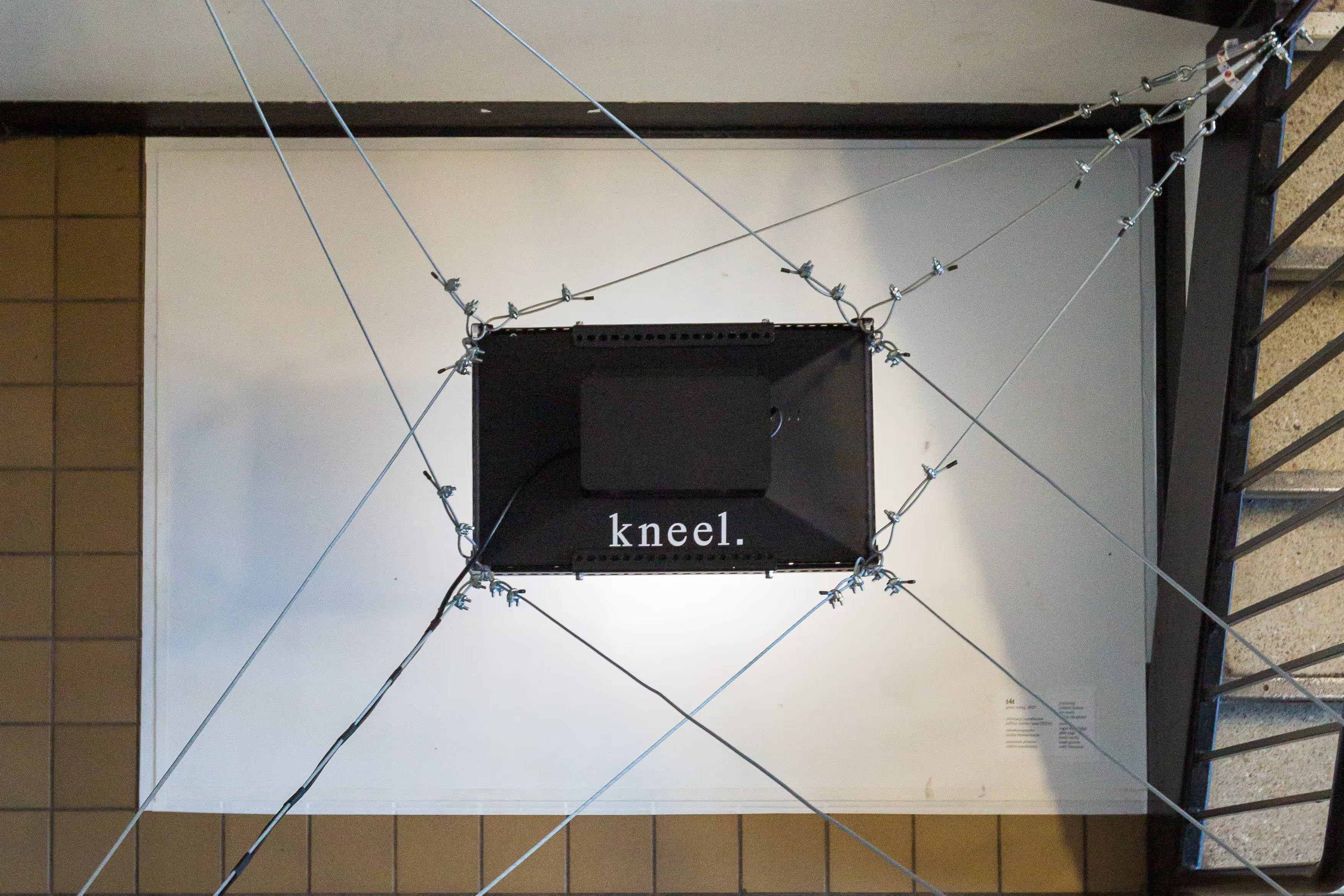
Video Installation
Directing
Producing
Editing
2022-2023
░░░░░░░░▒▒▒▒▒▒▓▓▓▓█▉▊▋▌▍▎▏
Photo Book
Photography
Editing/Sequencing
Color
2017-2022

░░░░░░░░▒▒▒▒▒▒▓▓▓▓█▉▊▋▌▍▎▏
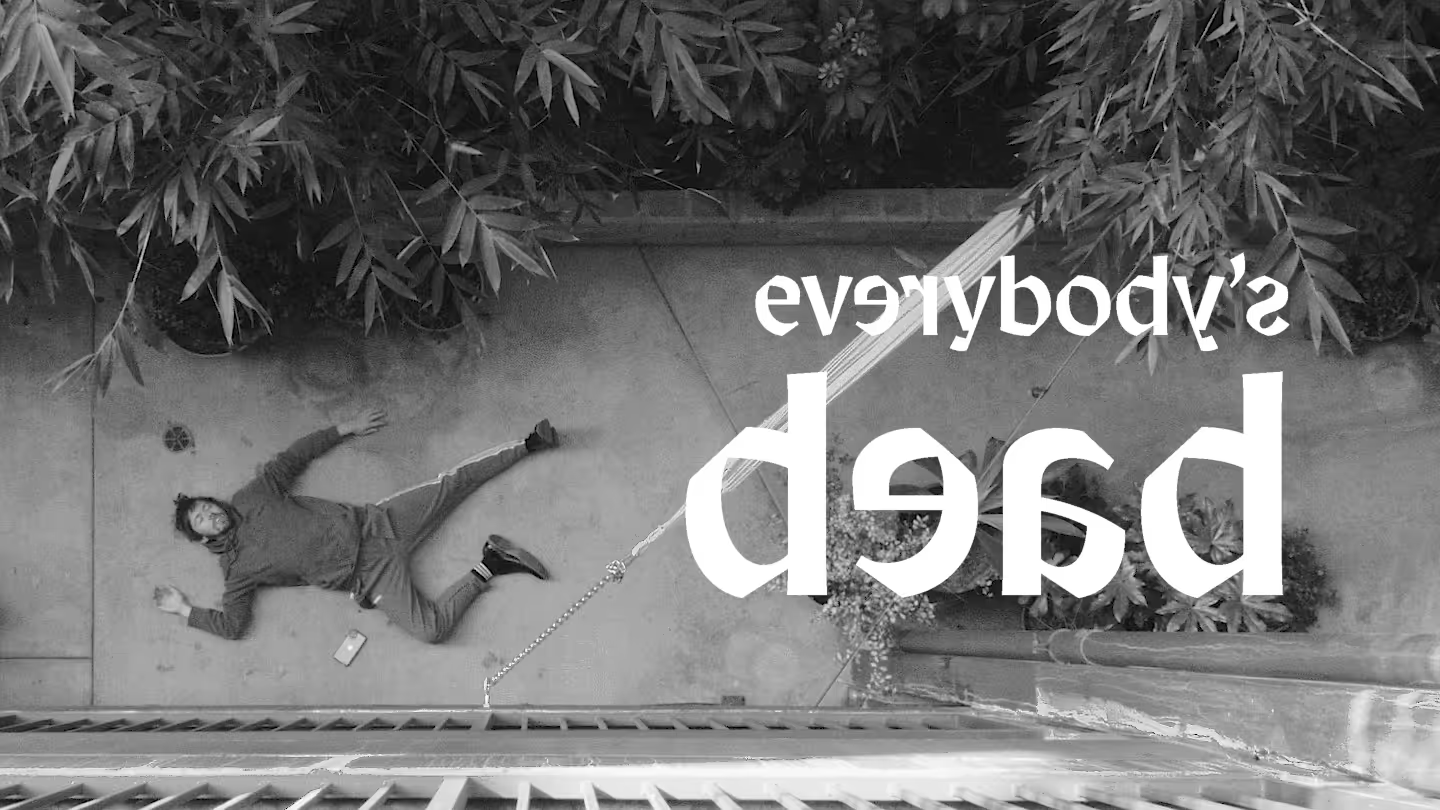
Music Video
Directing
Producing
Editing
2022
░░░░░░░░▒▒▒▒▒▒▓▓▓▓█▉▊▋▌▍▎▏
Photo Book
Machine Learning
Data Science
Photography
2019

░░░░░░░░▒▒▒▒▒▒▓▓▓▓█▉▊▋▌▍▎▏
Photo Essay
Photography
Editing/Sequencing
2019

░░░░░░░░▒▒▒▒▒▒▓▓▓▓█▉▊▋▌▍▎▏